

Workforce and leadership support
Indigenous Health Workforce Traineeship Program
Bringing training to Country
The Indigenous Health Workforce Traineeship (IHWT) Program, delivered by AMSANT, is supporting the development of a stronger Aboriginal and Torres Strait Islander health workforce by creating accessible education and vocational training pathways.
The program provides Certificate II and Certificate III Primary Health Care training, with a strong focus on making training accessible to people living and working in rural and remote communities.
A key success of the IHWT Program has been the introduction of flexible, on-country training delivery. AMSANT engaged three Registered Training Organisations (RTOs) to deliver the training, with two RTOs providing training directly within communities. This approach was developed in response to feedback from AMSANT Member Services and students who identified the need for training to be delivered in a way that is accessible, culturally appropriate and responsive to local circumstances.
The NT Pathways to Community Control program is a collaborative effort led by the Northern Territory Aboriginal Health Forum (NTAHF), AMSANT, and the NT Government. It aims to transition primary health care services from NT Health to Aboriginal Community Controlled Health Services (ACCHS). This process acknowledges the unique health needs of each community, promoting a model of care that is culturally responsive and locally driven.
The goal of this program is to foster self-determination, enhance culturally safe care, and improve health outcomes by working in partnership with communities, government bodies, and health organisations.
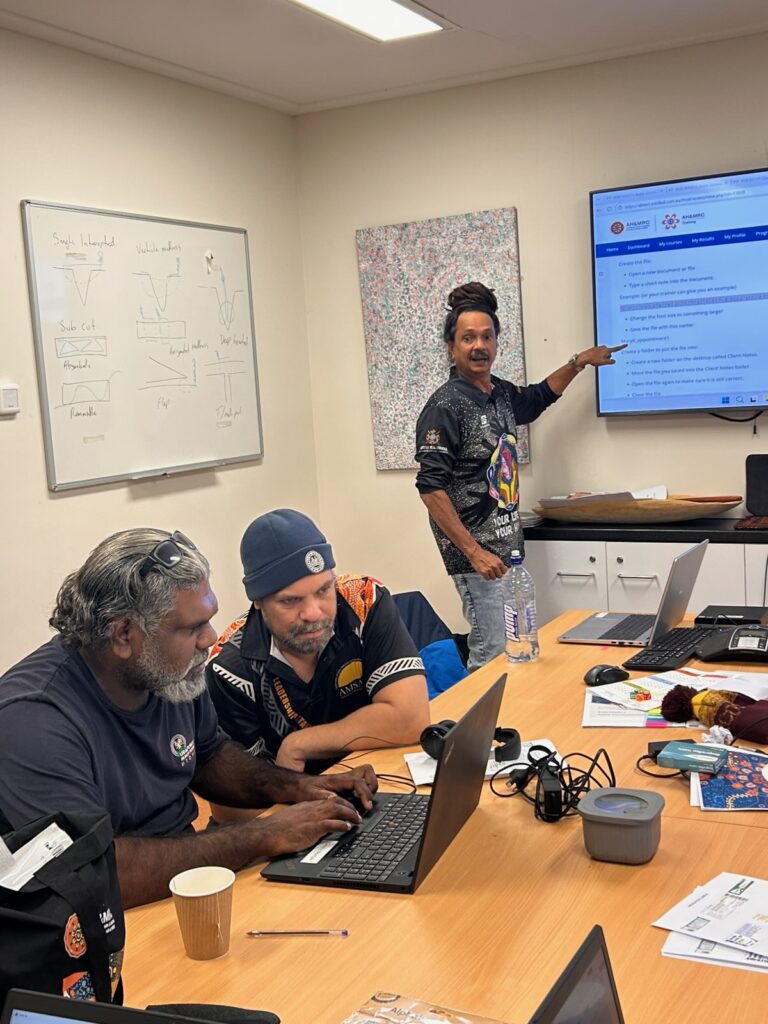
Taking training to communities
Traditionally, students living in remote communities can face significant barriers to completing vocational education, including travel, accommodation, family responsibilities, cultural obligations and time away from their workplace and community.
The IHWT Program has responded to these challenges by bringing training closer to where students live and work.
On-country delivery has allowed students to participate in training while remaining connected to their families, communities and workplaces. It has also provided an opportunity for learning to be connected to the local health service environment, making the training more relevant and practical for students.
The program has successfully commenced five separate cohorts, with more than 30 students undertaking training across rural and remote locations. Participating communities and health services include:
- Laynhapuy Homelands Aboriginal Corporation,
- Miwatj Health Aboriginal Corporation,
- Marthakal Homelands Health Service,
- Mala’la Health Service Aboriginal Corporation,
- Urapuntja Health Service Aboriginal Corporation and
- Central Australian Aboriginal Congress.
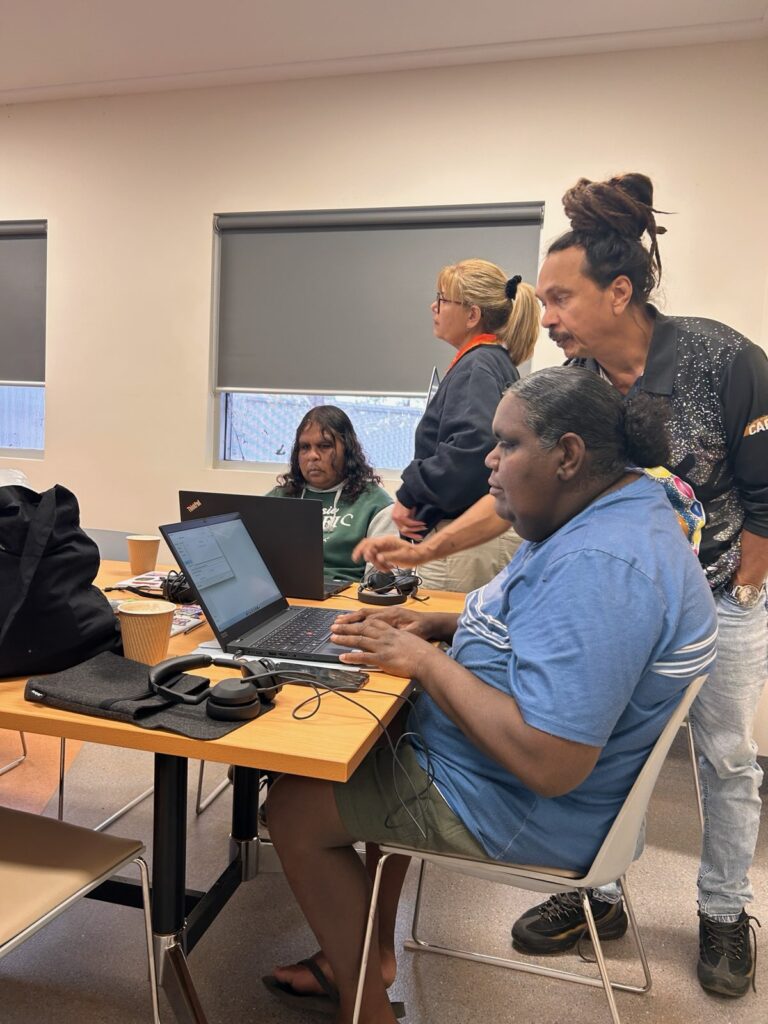
A model that reduces barriers
The success of remote and on-country delivery demonstrates that training does not always need to follow a traditional classroom-based model.
By working closely with Member Services, students and RTOs, AMSANT has been able to develop a more flexible approach that recognises the realities of working and living in remote communities.
This includes working around cultural responsibilities, Sorry Business, weather events, work commitments and community priorities, while maintaining the requirements of accredited training.
For students, this flexibility can make the difference between being able to participate in training and having to withdraw or delay their studies.
Building the local health workforce
The benefits extend beyond individual students. Training local people within their communities helps build the capacity of Aboriginal health services and supports the development of a sustainable local workforce.
Students are able to develop skills and knowledge that can be applied directly within their health services, while employers benefit from supporting their existing workforce to gain nationally recognised qualifications.
The program is also helping create clearer pathways for students to continue their education from Certificate II through to Certificate III and beyond, supporting long-term career development within the Aboriginal and Torres Strait Islander health workforce.
A stronger pathway for the future
The extensive collaboration between AMSANT, Member Services, students and RTOs has been central to the success of the program. Establishing on-country delivery has required significant planning, negotiation and flexibility from all partners.
The early results demonstrate that when training is designed with communities rather than simply delivered to communities, participation and engagement can be strengthened.
The IHWT Program is expected to achieve its strongest number of completions and cohort graduates to date, demonstrating the potential of flexible, community-based training to create meaningful education and employment pathways.
Most importantly, the success of remote delivery demonstrates the value of bringing education to Country, supporting students where they live and working alongside Aboriginal health services to identify and respond to local workforce needs.
The IHWT Program is more than a training initiative. It is an investment in people, communities and the future of the Aboriginal health workforce. By reducing barriers to education and supporting local capability, the program is contributing to stronger health services and greater opportunities for Aboriginal and Torres Strait Islander people across the Northern Territory.
Contact the IHWT team
Get in touch
To find out more out Pathways to Community Control, please contact us.